The Art of Australian Wildflowers: Meryl Bell's Story
Long before Bell Art existed, there was a farm in Bridgetown, in the south-west of Western Australia, with wildflowers kept on a mantelpiece.
This is where Meryl Bell's story begins.

The Farmhouse in Bridgetown
Meryl grew up on a farm in Bridgetown, Western Australia. It was here that she first came to love Australian wildflowers, with her mother Sophie's mantelpiece always filled with native flowers in bloom. One flower stood out above the rest: Brown Boronia. With its warm, honeyed scent, often sold in great bunches on the streets of Perth each spring.
Years later, Meryl brought her own children back to that same farm during school holidays, to visit their grandmother. Her daughter Amanda, who now owns and operates Bell Art, remembers those visits well.

It was on those same visits that Amanda came to know the wildflowers her mother loved.
The Boronia was still there each spring, filling the farmhouse just as it always had.
The floral scent as much a part of Amanda's own childhood as it had been Meryl's.

Finding Her Signature
Meryl's path to painting wasn't a formal one. She took what her family describes as the equivalent of TAFE art classes, along with the odd course under a visiting artist. Building her technique and composition piece by piece rather than through art school.
Her turning point came when Alexander Galleries took on some of her pieces. Gallery owner Alex Risco became her mentor. It was Risco's encouragement that gave rise to one of the quietest, most distinctive habits in Meryl's work.

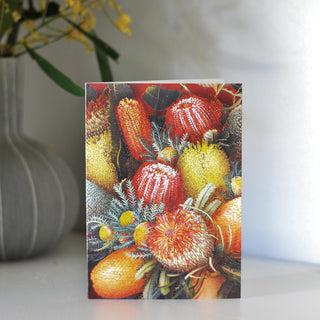
Meryl admired the richness and detail of the 17th-century Dutch masters, and brought that same rigour to her own work. But where they painted peonies and roses, she chose Australian wildflowers, giving native flowers the kind of considered, painterly attention usually reserved for European gardens.
Meryl held her first solo exhibition in 1984 and continued to show her work through the decade that followed, including a third exhibition in 1988.
Painted From Life, Never From a Photograph
Every Meryl Bell painting began with a real, freshly cut wildflower, never a photograph. Which flowers she painted, and how many, depended on what was coming into bloom and what an upcoming exhibition called for: a good variety of colour, species and scale, from small studies through to large arrangements.

A Signature Hidden in Every Painting
Because Meryl always painted from a real flower rather than a photograph, the odd visitor would sometimes still be resting on it: a ladybird tucked among the petals, a bee caught mid-visit, a moth settled on a leaf. Rather than paint them out, Alex Risco encouraged her to leave them be.
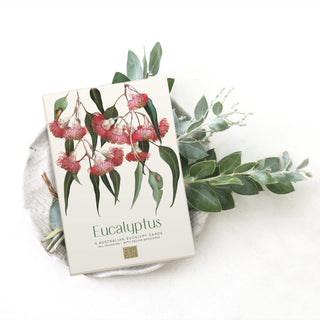
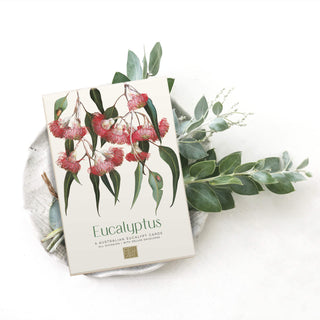
It became Meryl's quiet signature, a single insect, hidden somewhere in almost every piece she painted, a small, private proof that each work began with a living flower rather than an image of one. Next time you pick up a Bell Art tea towel or card, look closely. You might just find it, tucked among the blooms.

Across more than three decades, Meryl created over 200 artworks. Many stayed within the family. She made sure each of her daughters and grandchildren had a painting of their own: Amanda's was Southern Ambassadors, since sold on. Today she keeps Leschenaultia Vase, also known as Sophie's Choice, painted by Meryl for her own mother, Sophie.

Meant for Every Home
A painting, however rich and detailed, can only ever hang in one home at a time and Meryl wanted her wildflowers shared by many, not owned by a few.
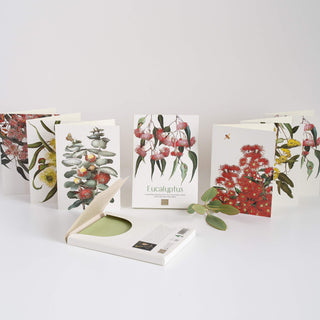
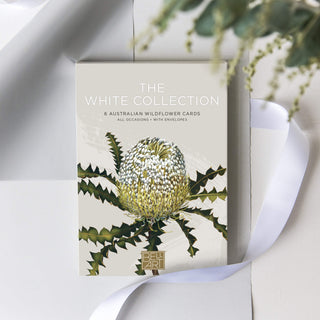
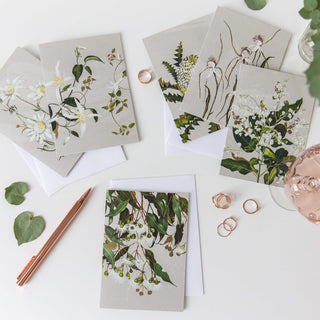
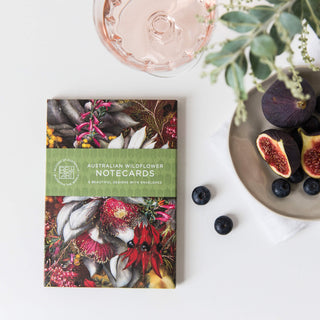
While Amanda was still at school, Meryl and her husband Don founded Bell Art, turning her wildflowers into Australian flora prints and cards so more people could bring a piece of her work home. The range has grown from that same idea ever since.
From Canvas to Collection
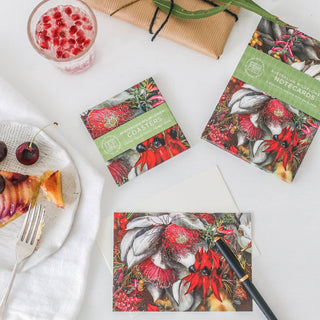
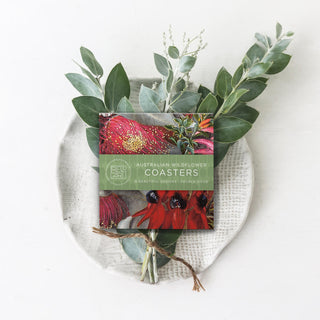
That idea still shapes every Bell Art product today. Each of Meryl's original paintings is digitally scanned, and individual flowers are drawn from it to build new product ranges, always designed to stay true to the intent and focus Meryl brought to the easel.


A Thoughtful Addition
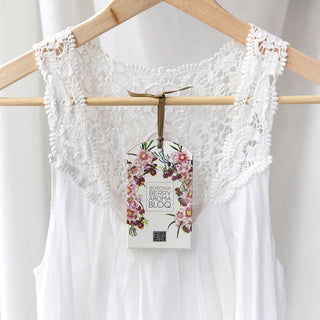
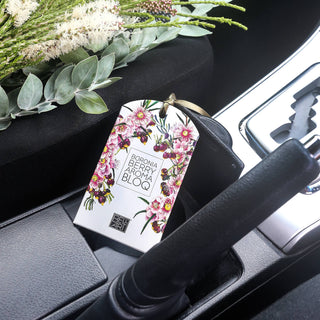
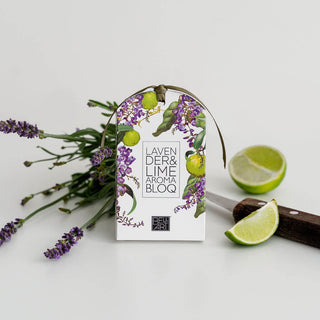
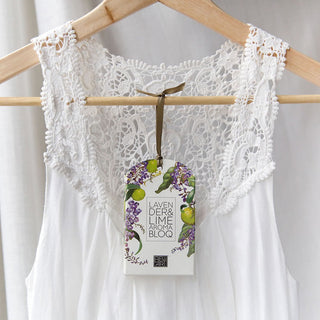
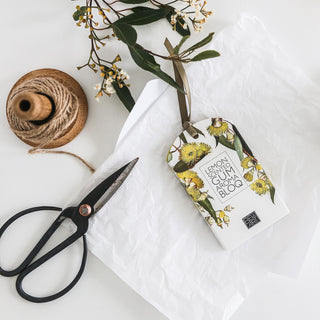
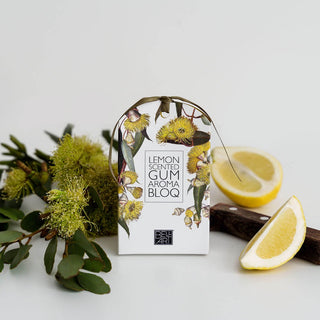
Gift cards were followed by card sets as the range grew, and later, the Aroma Bloqs. Born from the same thinking of taking something Meryl already loved, and making it giftworthy.
Meryl had used the Thurlby clothing protector range in her own home for years, tucked into her linen cupboard and kitchen drawers, and had come to trust its quality and practicality. Bringing Thurlby's scents into the Bell Art collection felt like a natural next step, pairing a product she already believed in with her own artwork.

The range began with three scents. Today it has grown to ten, each one made by Thurlby and placed into packaging designed at Bell Art, featuring Meryl's artwork.
The same instinct guided the design of this product. Something small, practical and worth giving. An easy gift to pack for a trip overseas, and one you'd happily buy again.

A Legacy That Keeps Growing
Bell Art is still very much a family affair. Today, Meryl's daughter Amanda owns and runs the business, making sure every new range stays true to her mother's original intent.
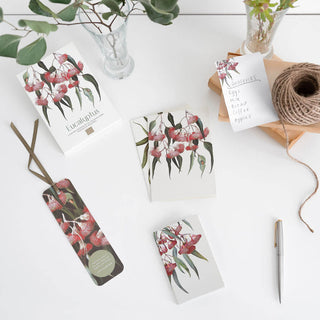
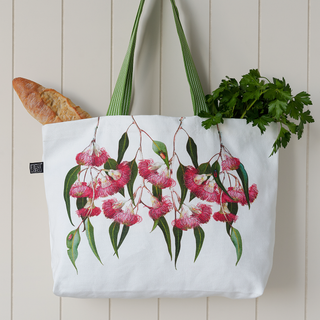
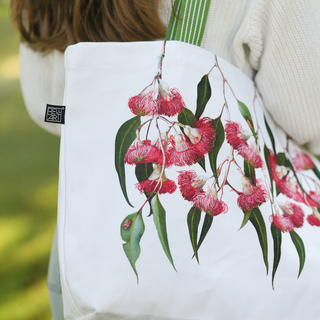
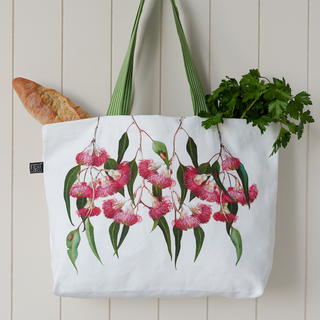
Meryl's collection of more than 200 original wildflower paintings remains the source for everything Bell Art creates today: cards, tea towels, stationery and gifts that carry her Australian wildflower artwork into everyday life, so anyone can own a small piece of Meryl's work for themselves.